
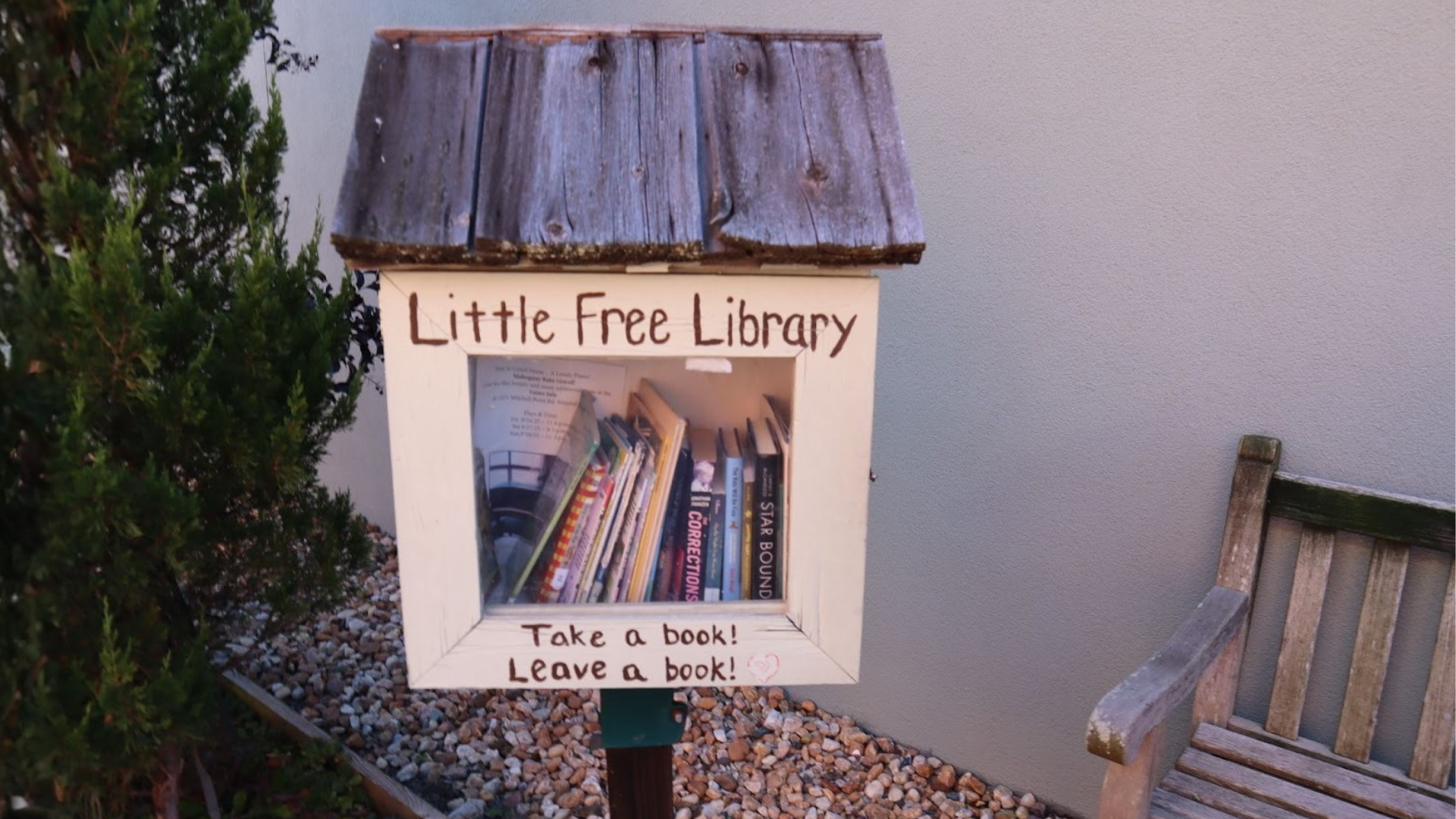
Located near businesses, homes, and other buildings, wooden boxes filled with picture books and novels of many genres are helping communities fall in love with reading.
Across the United States, Little Free Libraries (LFLs) provide free books to people of all ages. In a “take one, leave one” exchange, visitors are encouraged to replace the book they take with another, ensuring the library remains well-stocked.
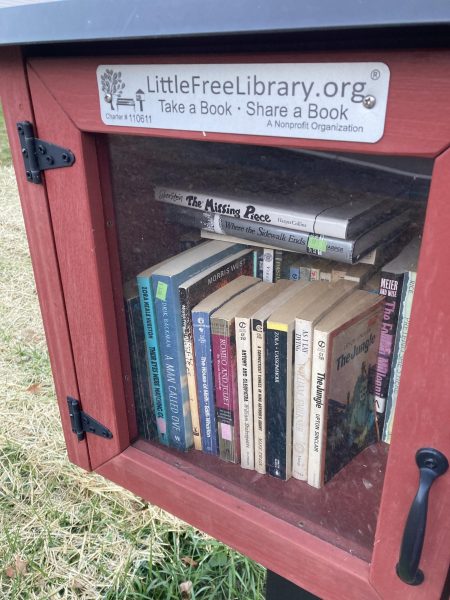
“[LFLs] are a positive influence to the community by demonstrating kindness and sharing to everyone,” senior Lillian Hawley said. “The community shares its wealth of knowledge through the books, which is essential for young minds, especially teens.”
Little Free Library is the nonprofit organization that heads the LFL program. However, their reach stretches further than just the United States; they have locations in over 120 countries, with one goal in mind.
“Our vision is a Little Free Library in every community and a book for every reader,” Little Free Library’s mission statement reads. “We believe all people are empowered when the opportunity to discover a personally relevant book to read is not limited by time, space, or privilege.”
LFLs are especially beneficial to children by improving their reading habits. In one study, 92% of children reported that they were able to obtain more books, and 88% were able to keep more books in their house because of the LFLs.
“I find the children’s books are gone quickly in my little library,” James Madison Regional Librarian and LFL Steward Jolyn Bullock said.
Not only do LFLs provide more books to children, but they also typically provide a wide variety of high-quality books, ensuring everyone can relate to what they’re reading.
“The Little Free Libraries are relevant to teens through the types of books, and they introduce teens to diverse topics and ideals,” Hawley said. “Little Free Libraries allow everyone from all sorts of backgrounds to be included in something community wide.”
LFLs aren’t just found in large communities and cities, but they are also prevalent in rural areas, including Louisa County. Across the county, there are more than 10 LFLs, and they can be found on the LFL World Map.
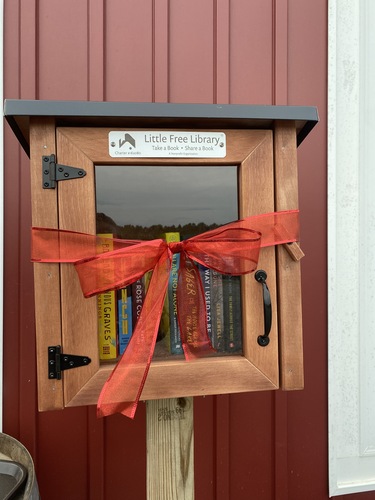
One of these is located at Southern Revere Cellars, where a former book club started their LFL. The owners continue to maintain the library today, even though the book club no longer meets.
“The book club and our employees helped supply the initial stock, but now it rotates on its own through the community members that frequent it,” Southern Revere Cellars Owner and Business Manager Sheridan Grime said.
No LFL looks the same. Creators are encouraged to personalize their library through the design. This includes paint colors and other decorations, as well as the literary content.
“We have filled [our LFL] with custom free bookmarks or other small surprises,” Grime said. “We also added magazines.”
For those interested in starting their own LFL in their neighborhood, the process is relatively simple. The first step involves locating a space for the library and choosing a steward who will maintain the library. Then, the second step is to purchase a charter sign from the organization’s online store. After that, the library will be officially registered and community members can begin engaging with it.
“We love to see folks get excited when they notice [the library], kids and adults alike,” Grime said. “Our patrons often come to our beautiful farm and curl up with a good book and a craft beverage. We are happy to spread the joy of reading.”