

A symphony of sounds welded together by the human mind, music is the sound of the human race. Music has an effect on us that is deeper than most imagine, an effect that even science struggles to understand how it affects our brain chemistry and molds our personalities.
Many studies, like a study from John Hopkins Medicine, dive deeper into the science behind the benefits of music on the mind. Music lowers stress levels, engages the brain, and inspires creativity. But music does more to the human body and mind; music shapes identity.
“I think music is a part of culture,” senior Adison Williams said. “I think a lot of cultures have music that they play and sing that has a lot to do with their values. Some older music has depictions of things that, while not modern values, are values of the time period and people.”

In any history class that explores other cultures, like Native Americans or overseas countries, a recurring topic is music. Each area has a different kind of music that showcases their beliefs, stories, and history. Native Americans, for example, use music to tell tales of their ancestors and about the land. Storytelling was and is highly important to Native Americans culturally. The symphonies are something that they identify with, a representation of who they are and what they come from. Each culture has a different sound, a different technique, a different way of expressing themselves, and it differentiates one culture from another.
As time has gone on, music has taken many different forms, forms that we now know as genres. Genres have grown, twisted, and branched off from one another to create subgenres, and then subgenres within those subgenres. The modern music scene has made it easy for each person to have their own unique playlists. For example, when people think about rock, they might think about bands like Kiss or ACDC. Those bands are often considered the staple of the rock genre, but rock has developed into grunge, punk, alternative, emo and more.
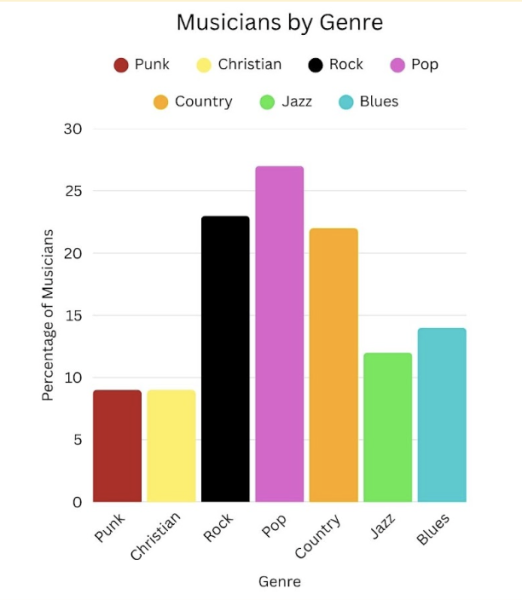
“I don’t hate any specific genre,” senior Zoe Craig said. “I just think that it’s different and it’s just not my style; it applies to each person differently. I think that all music is cool because it’s just a form of expression.”
Lots of genres of music are more than simply music. The melodies create communities, styles, and hobbies within them. A well known example is punk rock. Punk rock isn’t just sound, it is a movement. Punk started all the way back in the 1960s as a way to fight against the way that rock had become almost capitalistic. Many punk lyrics portray political opinions and make statements about the state of the world. Like punk, many genres of music can be very important when shaping one’s identity, creating a community of similarly-minded people.
“I think it’s really cool that there’s so many music communities,” Williams said. “Like how almost all alternative music has a community surrounding it. And then the communities have their own styles, interests, and opinions,all of that. It’s cool that music is more than just sounds.”
On the contrary of punk rock, classical music also has a shaping community. While classical music is much older, it’s considered an art form by many. It’s not uncommon to find community orchestras all over the United States. Classical music communities go all the way back to the 1600s, when the first modern orchestra made an appearance. They’re considered a “classy” experience, and a delicate art form by many.

Music doesn’t just shape the listeners either. Music shapes the composers and artists. Many artists dedicate most of their time and lifestyle to creating music, which in turn makes it part of their personality and identity. It takes a dedicated, loving fan of music to create it. Turning music into a career is a difficult process that takes a lot of time and effort, along with persistence. Every artist, even Taylor Swift and Billie Ellish, had to start somewhere. For artists, music is a burning passion that shapes much of their work ethic, driving them to work harder to reach their dreams.
Music has been a crucial part of humanity since the very beginning. Even though some believe that music is simply sounds, science begs to differ. The sounds have long been a way to showcase both the beauties and sadness of living, and a way to express stories and emotions that words alone can’t properly express. Music is a cornerstone of many cultures, and the cornerstone of many people’s lives. Music creates a mold of freedom to be whoever one desires to be.






zayden • Apr 24, 2026 at 8:14 am
tuff