





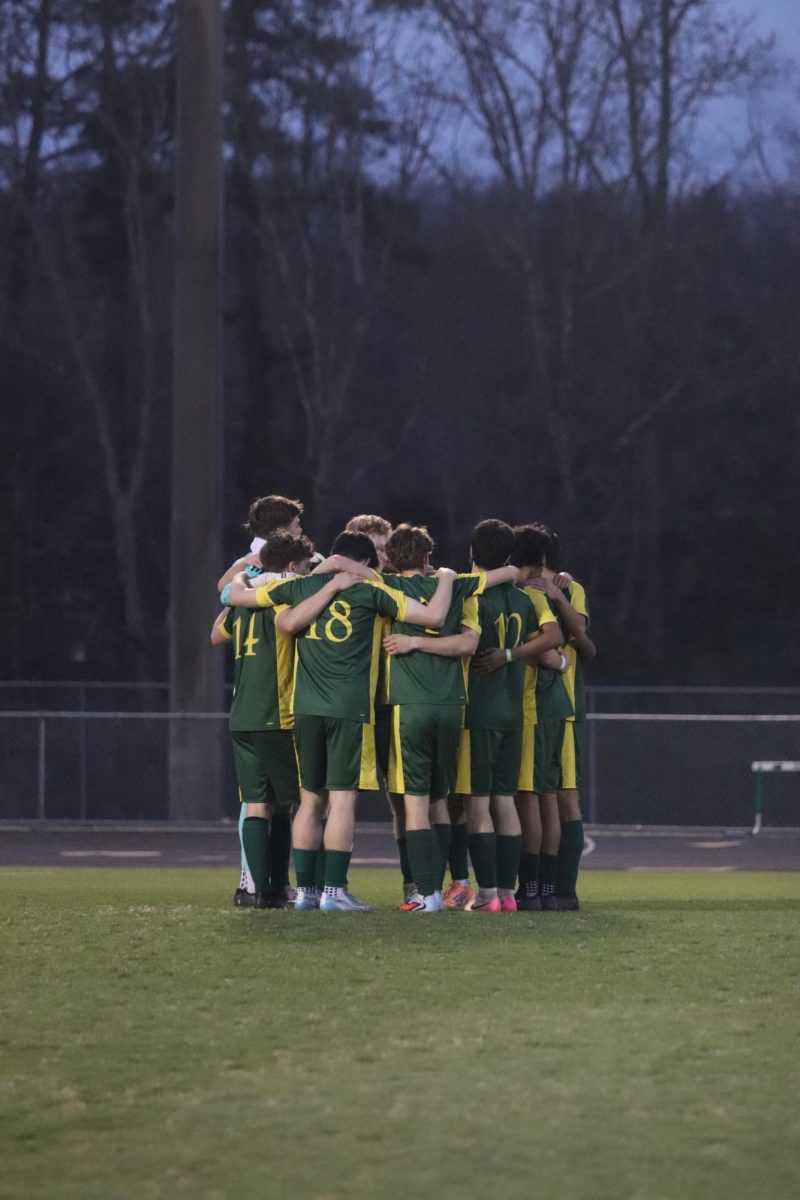





































An athlete’s main goal is to perform to the best of their ability. To run the fastest, to score the most points, to win. A huge factor in this is pre-season conditioning, the hard work athletes put in before the grind of the season. According to The University of Rochester’s Medical Centers Health Encyclopedia, “No matter what sport or athletic activity you do, conditioning will make you better at it.”
Without pre-season conditioning, athletes would not perform the same. As said in an article about training and conditioning from B-Physical Therapy, “These programs enhance an athlete’s ability to perform at higher intensities for longer periods, directly translating into improved performance on the field ,court, or track.” In addition to this, their team bond also wouldn’t be as strong, and skill sets wouldn’t be as sharp.
“I feel like there’s a huge difference between last season and now.” senior Kaiir Jones said when describing how pre-season conditioning has progressed his basketball skill-set.
Pre-season conditioning acts as a way for athletes to get back into the groove of competing . It also helps with tuning back into their competitive mindset for the oncoming season.
“When we’re doing little technical drills, it helps with things like my touches, my trapping and my passing. Just overall basic skills that are needed and necessary.” sophomore varsity soccer player Calleigh Madison said.
Pre-season conditioning helps athletes to keep up with their athletic performance. It also keeps their skill sets sharp and ready for the oncoming season. According to Revolution Of Basketball Training, athletes should, “tailor workouts to address personal weaknesses, ensuring a comprehensive skill set that contributes to overall game improvement. Set measurable goals for each skill, allowing for targeted and efficient progress.”
“ [Physical Fitness] It helps us in being physically prepared to face teams that we need to be ready for. and also just being able to get to the ball because you never know what could happen.” senior football player Jahmere Ragland said.

It is debatable that the main element of conditioning is building physical strength and improving endurance. Data suggests that this has been proven plenty of times by researchers. including many under the National Library of Medicine, The NSCA (National Strength and Conditioning Association), and more, that pre-season conditioning makes athletes stronger, and their endurance and physical capabilities higher.
An experiment conducted by Barry University, Miami Shores, FL. Consisted of weeks of “high intensity resistance training and appropriate conditioning(Human performance lab.)”, on a district two women’s basketball team.
The training consisted of four hours of on court training and then four hours of strength conditioning . Strength conditioning consisted of things such as functional core movements, timed laps , and olympic style lifts. The researchers’ conclusion stated that, “Coaches can transform this seemingly restrictive period [Pre-season] not into a constraint, but into a valuable opportunity to significantly enhance athlete readiness for the rigorous demands of the competitive season,”. To add on to the quote, it doesn’t just mean preparing athletes for competition, but also adapting their bodies early, so that injuries are less likely.
“When you get injured it sucks. When you’re a starter it hurts the team because they have to find a replacement, and someone has to step up for you” said Ragland when discussing the effects of an athletic injury. His teammate, senior Lavartrell Creasy, added that,” For a senior, it would impact a lot. Missing the majority of the games, and plus, if you want to take it far in football, then it would just ruin a lot of chances coming from an injury.”
Pre-season conditioning puts an athlete’s body through nearly the same conditions as a game or competition would. This gets the body ready for physical demands and pressure of the upcoming season.
“A strong pre-season conditioning program helps prepare the body for these demands,”said by The New York Medicine Institute, “We often see athletes who come in for evaluation only after an injury has occurred. Many of these injuries especially to the ACL could have been prevented with targeted strengthening and mobility work before the season began.”
Another key point in conditioning is the building of chemistry among the athletes. How the athletes work together can make, or break a game. In my experience in being a volleyball player I’ve found that communication is crucial. Without it balls were dropped and we had plenty of unforced errors. The games we played well in were the ones where we talked to each other the most, and it was also those games that we truly felt like a team.
“In the realm of sports, the synergy within a team is often as influential as individual skills.” states Exercise Scientist and football coach Sa’Quan Hicks, ”The psychology of team bonding delves into the intricate web of emotions, communication, and shared experiences that create a sense of unity among athletes.”
Pre-season conditioning puts a group of people who may, or may not know each other into a high stress environment. It’s been proven that stress bonds people faster than any ice-breaker. This is crucial due to the fact that teams who have good chemistry usually play better.
According to the McCormick School of Engineering Magazine, Northwestern Engineering’s Noshir Contractor said, “How people get along together or how well they trust each other, suggest that teams are defined not just as an aggregation of individuals and their attributes, but also by the relationships that existed previously among them.” Displaying how a team’s chemistry is very important in order to achieve success competitively, and why it’s important to have pre-season conditioning to build or strengthen these bonds early on.
 However, some may argue that pre-season conditioning could be a waste of time or not useful. For example, as far as injuries go some could argue, “It [Conditioning] just helps you get in shape but you can’t really prevent an injury,” said sophomore Payton Harman. It has also been said to potentially tire athletes out before the season even starts. As said by junior Mya Baker, “You do a lot of running, and you tend to just get really sore before the season even starts.”
Nonetheless, you can’t exactly prevent all injuries. However, by conditioning and better adapting your body to the pressures of competition, you can lessen the risk significantly. As said by sophomore Noah Schmitt, “ Injuries will happen less if you condition because you’re more adjusted to the environment.” We can also see this within our own football team. High school athletes conditioned all summer and during every part of their off-season, and only have had 3-5 unpreventable injuries throughout their season so far.
In contrast to the statement of athletes being worn out before their season even starts, a body that works hard becomes stronger. As stated by The Mayo Clinic Health System, “As you incorporate strength training exercises into your fitness routine, you may notice improvement in your strength over time.” while also adding,”As your muscle mass increases, you’ll likely be able to lift weight more easily and for longer periods of time. If you keep it up, you can continue to increase your strength, even if you’re not in shape when you begin.” Further proving that an athlete that works hard pre-season, will be a stronger athlete during the competitive season.
In conclusion, an athlete’s main job is to perform to the best of their ability. A major way to achieve the success that many athletes are so driven to fulfill is through pre-season conditioning.