








































According to Vogue, fast fashion is defined as a piece of clothing mass-marketed to follow a rising trend, often originating from runway looks. These trends have increased in quantity over the years, with over 50 microtrends per year, pushed by social media and the “fear of missing out” (FOMO), promoting mass consumerism.
Due to fast fashion’s low costs, many don’t see it as a difficult purchase and get rid of items after the trend ends. Fast fashion is cheaply made, pushing out over 100 billion cheap articles of clothing every year. On average, a piece of clothing lasts about five weeks in one’s closet before it is thrown away or donated, leading to an abundance of fast fashion in secondhand stores. Because of this, I believe that fast fashion oversaturates the secondhand market, which can lead to a negative shopping experience overall.
In the 2000s, fast fashion used to strictly apply to popular brands like H&M and Zara, companies that would base their collections off of runway styles. These styles were made to be quick and affordable copies of luxury brands, making it easy for everyone to participate in a trend.
When Shien was released worldwide in 2008 as ZZKKO, it began as an online wedding dress vendor, and it wasn’t until 2020, after many rebrands and a range of offered products, when its popularity and sales grew exponentially, from $3.15 billion in 2019 to $15.7 billion in 2021. On any given day, Shien has as little as 600,000 styles on sale at any given time, each with a variety colors, fabrics, and patterns in order to maximize and guarantee sales. Each garment uses 700 gallons in water pollution, and the fast fashion industry contributes to 35% of global microplastic pollution.
In 2020, during the height of the COVID-19 lockdown, when students were out of school and adults were out of work, many turned to social media for a sense of normalcy, and fast fashion, and specifically Shien, hauls grew in popularity. In 2022, the Tik Tok hashtag #Shienhaul, which is used for promotional content, had amassed over 6.4 billion views. Many of these hauls were sponsored by Shien itself, used to push out the brand through trending social media accounts with previously accumulated followings through their “campus ambassador” program, where Shien clothes are sent to dedicated creators that advertise the brand.
Although the popularity of thrifting has risen after COVID-19, everyone has their own reason to shop second hand, and not all of the rise in sales in recent years can be attributed to the trend of thrifting or rise in fast fashion.
“[I thrift because] I just really like clothes, and [thrifting] is the most affordable way,” sophomore Teagan Gentry said.
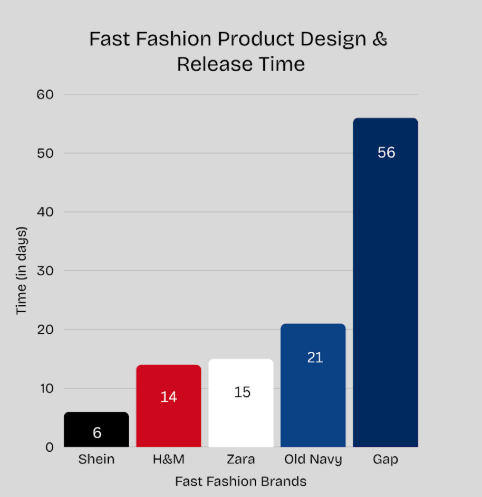
When comparing affordability, some find fast fashion to be cheaper, but many forget to consider quality. Shien and other fast fashion companies’ products are of a lower quality, as the average piece of clothing from Shien is around $10. In order to sustain Shien’s quick and affordable business model, the company analyses current trends and pushes out around 50-100 pieces per style, making more of what is bought and dropping what is not. In general, Shien can create new styles of clothing every three and a half weeks, in comparison to retail’s average of multiple months. According to Reuters, clothes are less than 10% cotton, but are at least 75% polyester. Polyester is a plastic byproduct which uses 342 million gallons of oil every year. Not only does polyester not biodegrade, it is also low quality, tending to be less breathable and comfortable in comparison to cotton.
After trends pass, an increase of clothing that fits that trend can be found in secondhand stores. Although many believe donations give their clothing a second life, only 20-30% of donated clothes are actually put on the floor, and an even smaller percentage are sold. Only clothes that are clean, damage-free, and in season will be put on the floor, and the rest are exported to developing countries, like in Kantomanto, Ghana, where the largest secondhand market is located. Due to the sheer quantity of these exports, these locations are often overwhelmed by the donations, and most get dumped illegally, contributing more pollution than if the exported clothes were just thrown away in US landfills from the start.
“I feel like [thrift stores] have more [fast fashion] because people shop [trends] online,” sophomore Sofia Mechling says. “People give clothes away once the trends are done, and then there’s more of that at the stores.”
By having larger amounts of fast fashion donations, a larger percentage of clothes put on the floor are of a poor quality. Because of this, thrift stores’ fast fashion ratios increase, decreasing the (quality) of the store overall. Fast fashion

thrift stores not only by sheer quantity, but the lack of quality. People thrift for many different reasons, but thrift stores began as places with affordable, quality pieces of clothing that could last generations without breaking the bank. These days, thrift stores are overrun with mass-produced items that may appear sturdy, but have been shown to fall apart quickly, averaging less than 10 wears before becoming unusable or thrown away.
“I think thrifting is way better than sites like Temu and Shein because you can look at the clothing or product and know exactly what you’re getting, unlike Temu and Shien where they can lie to you and give you something you didn’t order,” sophomore Emma Copeland said.
In recent years, waves of “de-influencers” have filtered through social media with the goal of preventing thoughtless purchases, but even these videos targeted against buying end up advertising a product, which is, in itself, still influencing a purchase. Especially on apps like Tik Tok, where trends can rise sharply and fall just as fast, one’s status is enough to change a group of people’s spending habits.
“Don’t look at [the item], look at the brand. Feel [the piece of clothing] and notice, ‘oh, that’s not what I want,’” sophomore Caroline Ware said when asked on how she picks through fast fashion items.
Instead of following rising trends, whether that be a new mindset or lack thereof, people should be making conscious purchases, escaping from the disposable model that companies like Shein use. In doing this, consumers may end up purchasing, and eventually donating or throwing away items less. Of course, one can only change their mindset in the present, so if you have clothes to donate, it is better to only donate clothes for the time of year, rather than donating a coat in the middle of July. By starting small, people can change their consumerist mindset, helping not only their wallet, but the planet too. Small steps can keep fast fashion out of secondhand shops, bringing back the sanctity and availability of quality, affordable goods for the public.
Thrifting can be more than the clothes purchased, it can also be a fun experience. Since thrift stores only sell what is donated, it creates a sense of rarity, since there is no abundance of which can give one a feeling of accomplishment when they find a good item. With overconsumption ramping up after the pandemic, less and less thrifted goods are actually quality items worth the purchase, which can leave many feeling disappointed, like their trip was a waste.